Researching Women with Learning Disabilities in World War I
Warning: This article contains offensive and upsetting language used to describe people with a learning disability during World War I.
After ten years of research, our project on women with learning disabilities during World War I has come to an end. These women played important roles in the war, yet their contributions went unrecognised. This project set out to learn more about their lives and the work they carried out.
Women with learning disabilities played an active role in the research. They worked alongside historians to choose the areas of study and decide how the findings should be shared. Their work included visiting museums, libraries, and archives to uncover more information.
The team discovered that records were hard to find because the term learning disabilities did not exist during World War I. Instead, outdated and offensive terms like “feeble‑minded” and “imbecile” were used in official records.

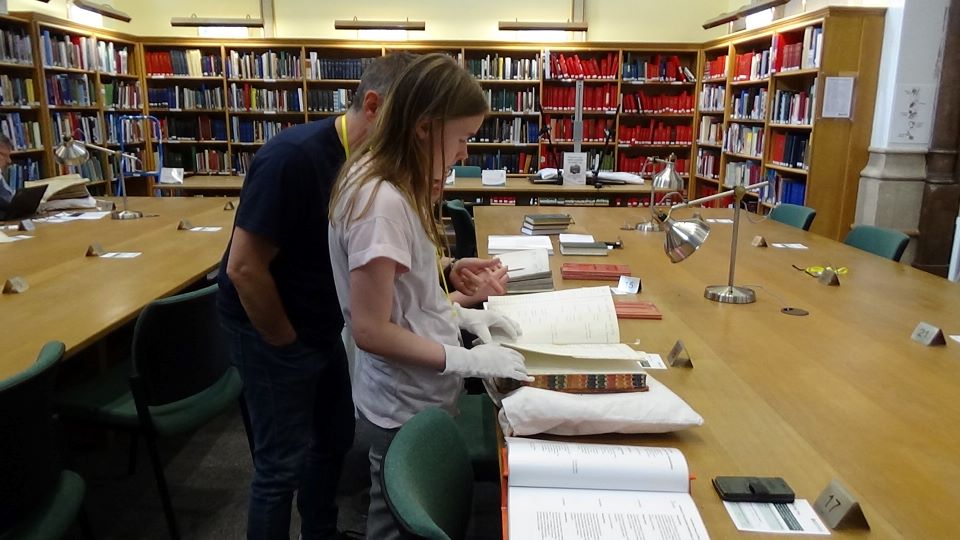
As part of the research, the team visited the Imperial War Museum, the Oxford History Centre, and other archives. They explored the roles women carried out during World War I, including work in munitions factories, laundry, and domestic service.
The Mental Deficiency Committee, established in 1914, was responsible for deciding whether a person required “special care.” Their decisions could result in women being moved to homes far from their families.
These placements included workhouses, institutions, and asylums, many of which were difficult and unpleasant environments. Records from the Mental Deficiency Committee were key sources for understanding the experiences of women during the war.
Ethel Jackson
Ethel Jackson was a 17-year-old girl with a learning disability and epilepsy. Her family and school did not support her much. She worked in kitchens but lost jobs because of her fits.
Ethel worked in a pub, which she liked, but the Mental Deficiency Committee questioned her, and because they said she had a mental deficiency she lost her
job. She later got married and moved to Canada for a new life.
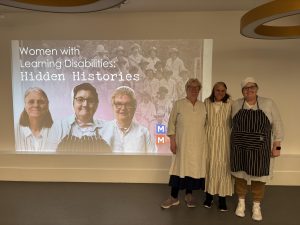
Learn more about Ethel Jackson in this video, portrayed by MLMC lived‑experience researcher Gina Regan.
Learn more about Mary Sloper in this video, portrayed by MLMC lived‑experience researcher Dawn Wiltshire.
Mary Sloper
Mary Sloper was 36 when first recorded. Her mother struggled to care for her. Mary did not go to school because she could not walk and was scared of soldiers.
The records about Mary were negative, focusing on her differences. The Mental Deficiency Committee gave Mary’s mum money to buy food for her.
Ellen Beale
Ellen Beale was one of 14 children. Her mum died when she was 11 years old, and her step mum did not like her.
At 12, Ellen had to leave home. She worked as a maid but got sacked for staying out all night. She met a man, got pregnant, but the baby died.
Ellen was sent to prison for 9 months for hiding the birth of her baby. After prison she was sent to an institution but ran away. She was sent to another institution in London and ran away again.
Learn more about Ellen Beale in this video, portrayed by MLMC lived‑experience researcher Pam Bebbington.
The project found that women with learning disabilities had a tough time during World War I. It highlights how differently women were treated then, while also showing their strength and resilience. This project aimed to give them a voice.
This research project and film were made possible thanks to The National Lottery Heritage Fund and National Lottery players.

Can we support you with your research project?
For more information on our Research Projects, please click here or get in touch with Yazz, at yazz@mylifemychoice.org.uk.